A first trip into the Sahara raises many questions: Will I be fit enough? Where will I sleep? Is it cold at night? What paperwork do I need? This guide walks you through the decisions, in the order our team helps travellers make them.
Step 1 — Choose your region
- Tassili n'Ajjer (Djanet): sandstone labyrinths and rock art; best for walkers.
- Tadrart Rouge (Djanet): red dunes and arches; spectacular and accessible by 4x4.
- Hoggar (Tamanrasset): volcanic mountains and Tuareg culture.
- Taghit (via Béchar): great dunes beside an oasis; perfect for a short first trip.
Compare them in Exploring the Algerian Sahara.
Step 2 — Choose your travel style
- 4x4 expedition with short walks: covers more ground; suitable for most people.
- Trek with pack animals: 4–6 hours of walking a day, donkeys or camels carry the camp; the most immersive.
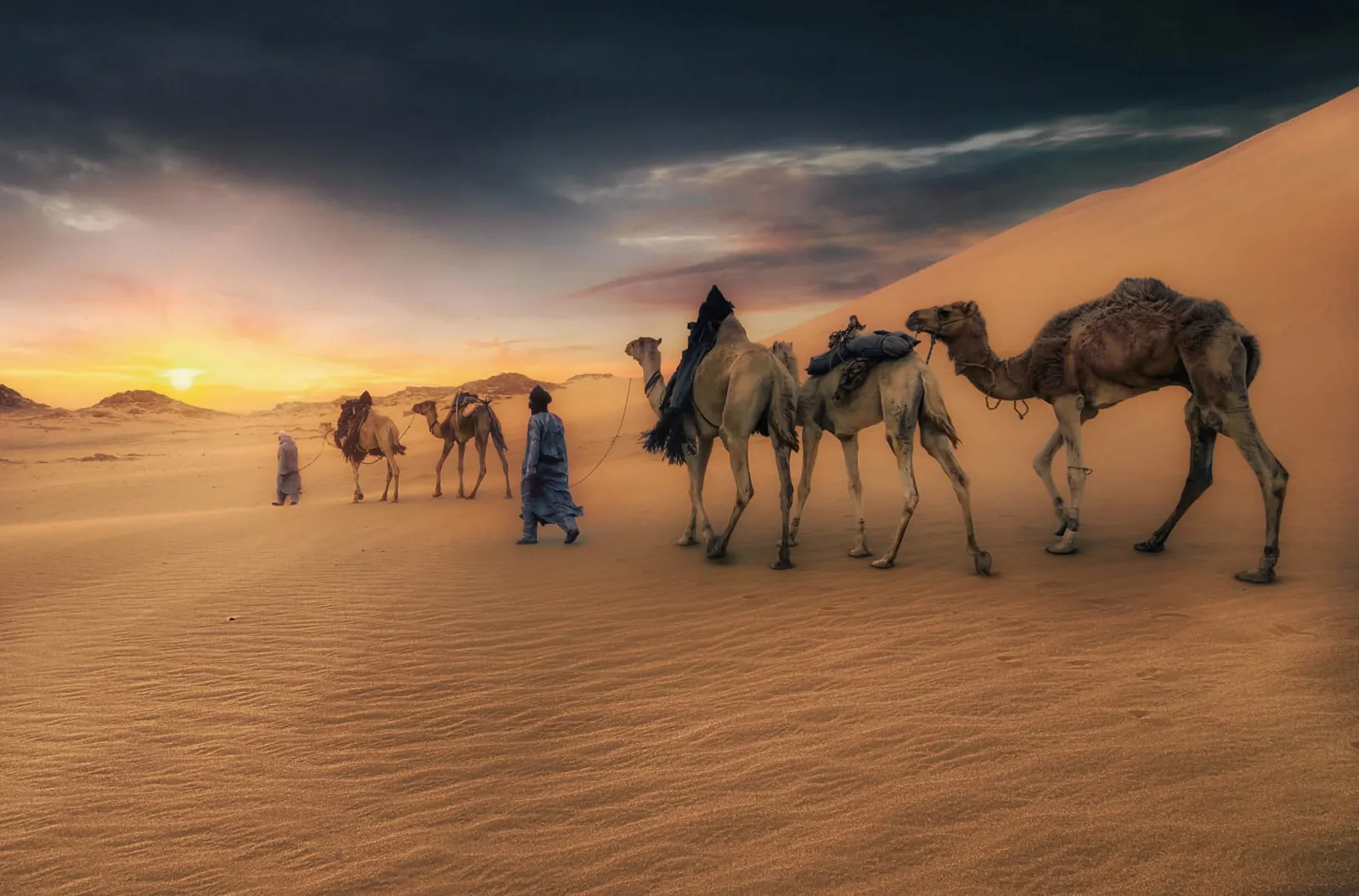
- Camel caravan: slow, contemplative travel; alternate riding and walking.
- Private or small group: our scheduled circuits are capped at small numbers; private departures follow your dates.
Step 3 — Check your fitness
For 4x4 circuits, regular walking is enough: daily walks last one to three hours on sand or rock. For plateau treks, be comfortable walking five hours a day; the first day often includes a steep climb of a few hundred metres. Tell us about any health issues — we adapt the pace and route.
Step 4 — Know what a day in camp looks like
Wake at sunrise with tea and breakfast; set off while it is cool; a long lunch break in the shade; walking or driving again in the afternoon; camp set up before sunset. The cook prepares fresh meals — salads, soups, tajines, couscous, bread baked in the sand — and the evening ends around the fire. You sleep in a tent or under the stars on a mattress. Simple washing facilities are provided; on longer trips, a shower stop is planned in town.
Step 5 — Pack for heat by day and cold by night
- Sleeping bag (comfort 0 °C from December to February).
- Layers: light long sleeves for the day, fleece and warm jacket for the evening.
- Broken-in walking shoes, camp sandals, chèche (headscarf), sunglasses, sun cream.
- Headlamp, power bank, reusable bottle, small first-aid kit, personal medication.
- Dust-proof pouches for phone and camera; there is no mobile signal in most areas.
Full list: what to pack for a desert trek.
Step 6 — Paperwork, advice and insurance
- Passport valid at least six months after arrival, and a visa. For trips mainly in the south, a visa on arrival may be possible at some airports with a confirmed booking through an approved agency — we confirm eligibility for your itinerary.
- Authorisations: desert travel in the south is organised by a licensed agency with an accompanying guide; we handle the permits.
- Travel advice: as of 19 October 2026, the UK, US and French governments advise against travel to some border areas and parts of the far south. Read our safety summary and your government's advice before booking.
- Insurance: comprehensive cover including medical evacuation is mandatory on our trips; check that it covers the regions you visit.
This is general information, not legal advice; always confirm entry rules with the Algerian consulate.
Step 7 — Respect the desert
- Take all rubbish back, including toilet paper.
- Never touch or wet the rock art; never collect artefacts or stones.
- Ask before photographing people.
- Follow your guide's advice on water, routes and wildlife.
Step 8 — Book
Pick a season (October–April), a region and a style, then ask for a proposal. Our Tadrart Rouge and Tassili n'Ajjer circuits are good starting points; each page shows what is included and the price per person. For anything else, request a tailor-made trip.
Sources: SEFAR Aventure field experience in Djanet and the Tassili since 1980; entry and safety information from the UK FCDO, US Department of State and France Diplomatie, consulted 19 October 2026.