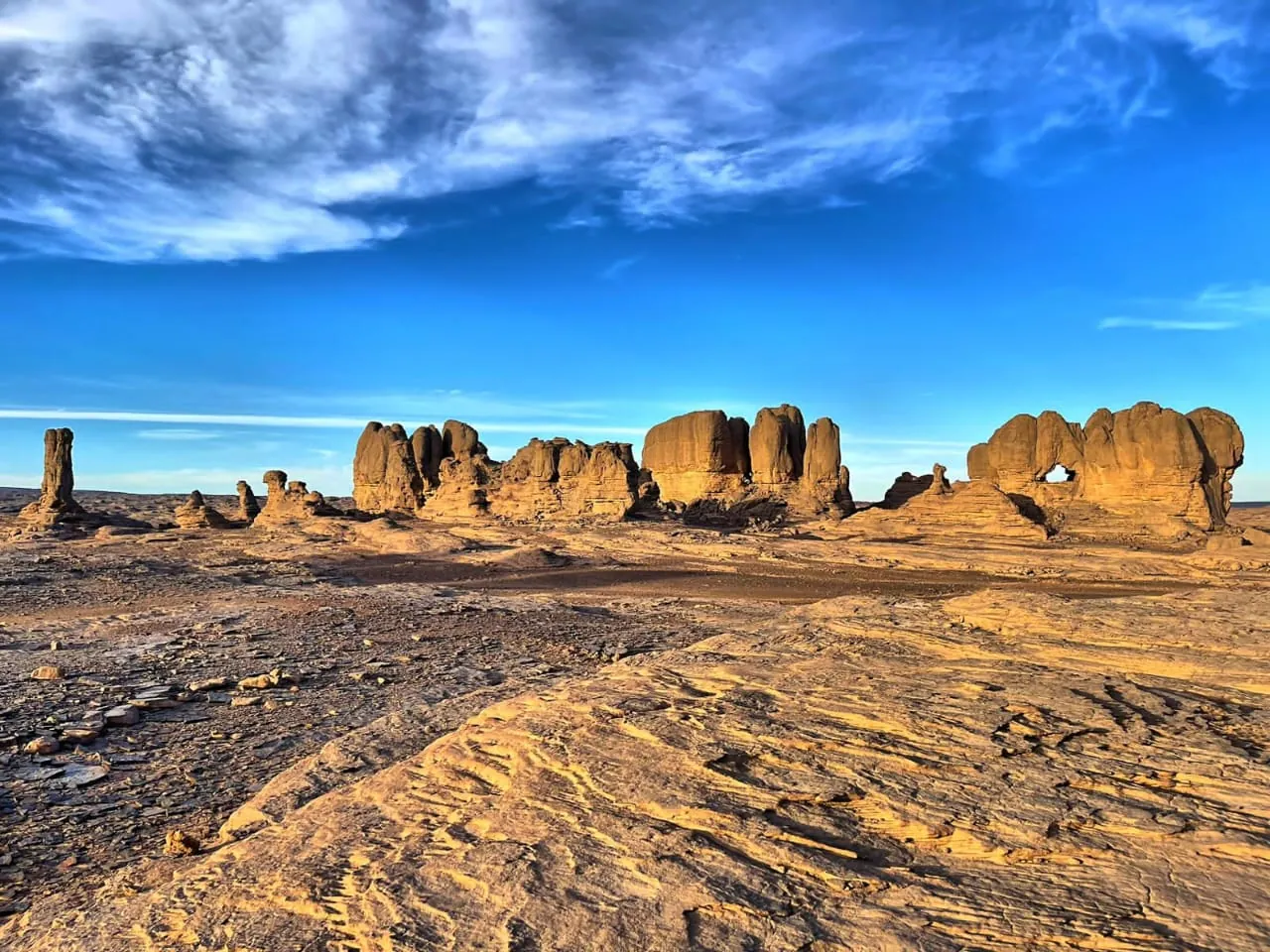
Algeria is a country of extraordinary scale: Roman cities by the sea, Ottoman lanes in Algiers, fortified oasis towns, and a Sahara of painted canyons, volcanic peaks and endless dunes. This guide gives you the essentials — why to come, how the country is laid out, its history and culture, when to travel and what to experience.
Why visit Algeria
Algeria is the largest country in Africa and still one of the least visited. For travellers, that is its great strength: you can stand alone in a Roman forum, walk for days among prehistoric paintings without meeting another group, and be welcomed in a market or a family home as a guest rather than a customer.
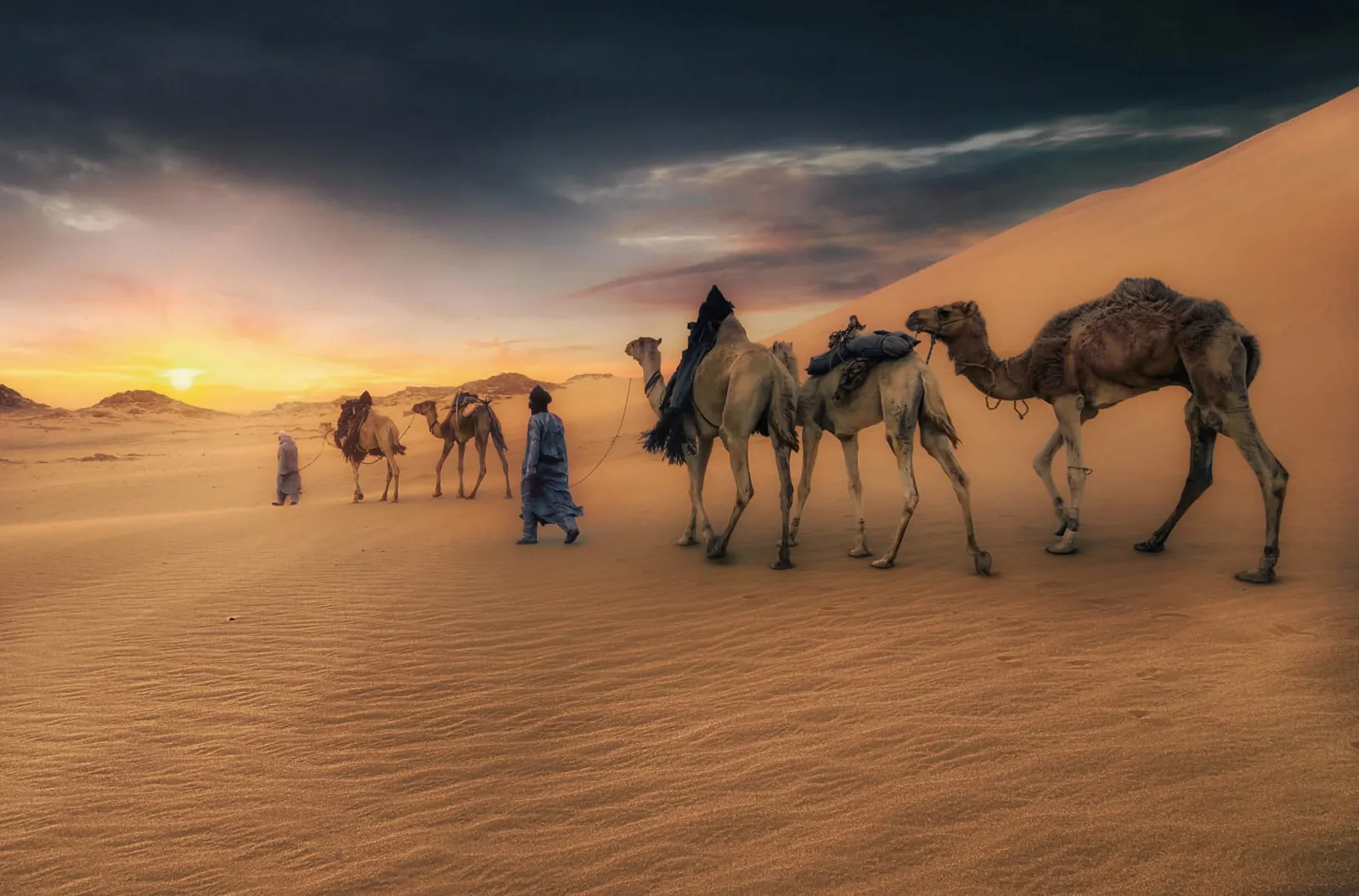
- A Sahara like nowhere else. More than four-fifths of the country is desert, and no two regions look alike: the sandstone forests of the Tassili n'Ajjer, the red dunes of the Tadrart, the basalt peaks of the Hoggar, the golden ergs of Taghit and Timimoun.
- Seven UNESCO World Heritage Sites. The Casbah of Algiers, the M'zab Valley, the Roman cities of Tipasa, Djémila and Timgad, the Kalâa of Beni Hammad and the Tassili n'Ajjer.
- A Mediterranean coastline of about 1,200 km, with capes, coves and port cities such as Oran, Béjaïa and Annaba.
- Living cultures: Arab, Amazigh (Berber), Tuareg and Mozabite traditions, music from chaâbi to raï, and a generous cuisine built around couscous and sharing.
- Authentic travel: no mass tourism, reasonable prices on the ground and genuine encounters.
Geography: three Algerias in one
With about 2.38 million km², Algeria is larger than Western Europe's three biggest countries combined. It is easiest to understand as three bands running from north to south.
The Mediterranean north (the Tell)
A green, mountainous strip along the coast where most Algerians live. It holds the major cities — Algiers, Oran, Constantine, Annaba, Tlemcen, Béjaïa — as well as the forests and villages of Kabylie and the Djurdjura range. Winters are mild and wet, summers hot and dry.
The High Plateaus and the Atlas
Between the Tell Atlas and the Saharan Atlas lie wide steppes and salt lakes, then the Aurès mountains in the east, home to the Chaoui Berbers and the Roman city of Timgad. The climate is continental, with cold winters.
The Sahara
South of the Saharan Atlas begins the desert: sand seas (ergs) such as the Grand Erg Occidental and Grand Erg Oriental, stony plateaus (hamadas), oasis towns like Ghardaïa, Timimoun and Taghit, and in the far south the mountain massifs of the Tassili n'Ajjer around Djanet and the Hoggar around Tamanrasset, where Algeria's highest peak, Mount Tahat, rises to about 2,900 m.
See every region in detail on our destinations page.
History and culture
Algeria's history is written in layers you can still see on the ground.
- Prehistory: the rock art of the Tassili n'Ajjer records thousands of years of life in a once-green Sahara — wild animals, herders, dancers and the mysterious "round heads".
- Numidia and Rome: Berber kings such as Massinissa ruled Numidia before Rome made the region one of its richest provinces. Tipasa, Cherchell, Djémila, Timgad and Tiddis remain among the best-preserved Roman towns in the Mediterranean.
- Islamic dynasties: from the 7th century Islam spread across North Africa. Berber dynasties left the Kalâa of Beni Hammad, the Ibadi towns of the M'zab and the Zayyanid capital of Tlemcen, rich in Andalusian art.
- The Ottoman era: from the 16th century Algiers was the seat of an Ottoman regency. The Casbah, its palaces and mosques date largely from this period.
- Colonisation and independence: France occupied Algeria from 1830. After a long War of Independence (1954–1962), Algeria became independent on 5 July 1962.
Today Arabic and Tamazight are the official languages and French is widely spoken. Culture is a blend of Arab, Amazigh and Mediterranean influences, from the Tuareg imzad violin to the music of Oran and the pastries of Constantine. Read more in our guide to culture and heritage.
The best time to visit
| Region | Best months | Notes |
|---|---|---|
| Sahara (Djanet, Tassili, Hoggar, Taghit, Timimoun) | October to April | Warm days, cold nights from December to February. Avoid June to September, when temperatures often exceed 40 °C. |
| North: Algiers, Oran, Constantine, Tlemcen | March to June, September to November | Spring flowers on the Roman sites; summer is hot but fine on the coast. |
| Coast and beaches | June to September | Swimming season; busy with Algerian holidaymakers in July and August. |
| M'zab Valley (Ghardaïa) | October to May | Pleasant almost all year except mid-summer. |
A great combination: spring or autumn in the north, followed by a week in the Sahara. Our practical information page explains the climate month by month.
Experiences not to miss
- Trekking among the painted shelters of Sefar and the Tassili n'Ajjer, with the camp carried by donkeys or vehicles.
- Watching sunset turn the dunes red in the Tadrart Rouge near Djanet.
- Sunrise over the volcanic peaks from the Assekrem plateau in the Hoggar.
- Getting lost in the stairways of the Casbah of Algiers with a local guide.
- Crossing the gorge bridges of Constantine and walking the streets of Roman Timgad and Djémila.
- Staying in a traditional house in the M'zab Valley and visiting the auction market of Beni Isguen.
- Sleeping in a bivouac in the dunes of Taghit or the red ksour of Timimoun.
- Tea with Tuareg families, bread baked in the sand and nights under one of the darkest skies on earth.
Plan your trip
Last reviewed: 20 October 2026