Ghardaïa & the M'zab Valley
M'zab Valley: the five ksour of Ghardaïa
A thousand-year-old urban landscape: walk the lanes of Ghardaïa and Beni Isguen with local guides and stay in a traditional house.
Five fortified towns built by the Mozabite community between the 11th and 14th centuries, rising like pyramids around their mosques above palm gardens — a UNESCO World Heritage Site at the gates of the Sahara.
About 600 km south of Algiers, the M'zab Valley holds a unique urban landscape: five ksour — El Atteuf, Bou Noura, Beni Isguen, Melika and Ghardaïa — founded by the Ibadi Mozabite community between the 11th and 14th centuries. Each town climbs a hill around its mosque, with its own palm grove below, and all are still inhabited. The valley was listed by UNESCO in 1982 and has fascinated modern architects for its simplicity and its adaptation to the climate.
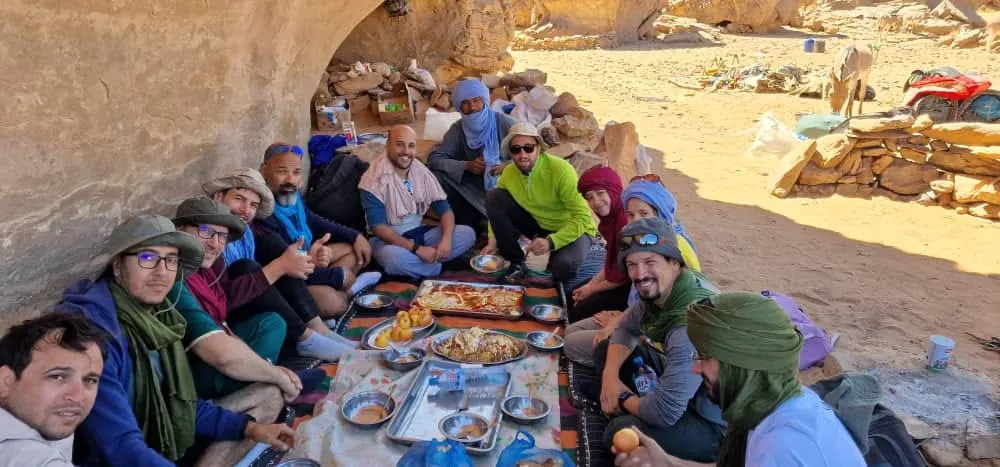
Mozabite society is known for its community organisation, its trading tradition and its hospitality. Carpets woven in geometric patterns are a local speciality, celebrated at a carpet festival each spring. Taste tiftitine pasta with a date sauce and the date couscous served at weddings.
Read What to see in Ghardaïa.
Ghardaïa & the M'zab Valley
A thousand-year-old urban landscape: walk the lanes of Ghardaïa and Beni Isguen with local guides and stay in a traditional house.
Constantine
Thirteen days across 2,000 years of history: Oran, Roman Tipaza and Cherchell, Algiers, Djemila, Constantine, Timgad, the Aurès, the oasis of Biskra and the M'zab valley.
Timimoun
Our longest cultural journey: seventeen days from the Mediterranean to the great dunes, with Roman cities, Constantine, the Aurès, the M'zab, El Goléa and the Gourara oases of Timimoun.
Ghardaïa & the M'zab Valley
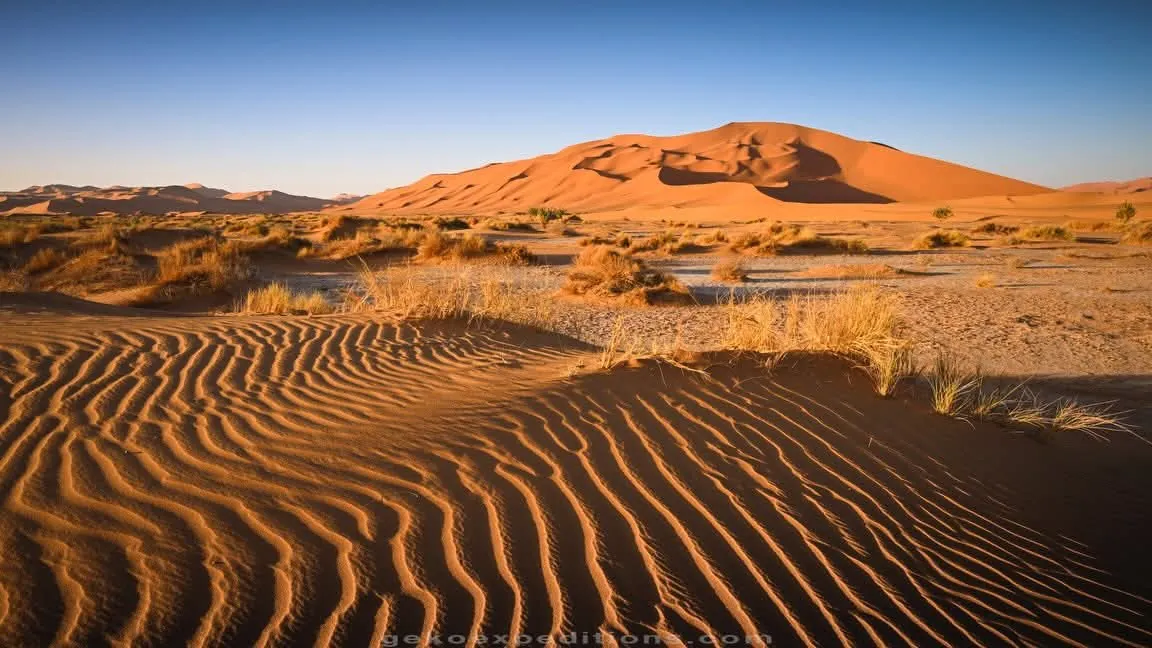
A week in the Saharan north: the five ksour of the M'zab, its palm groves and markets, sunset in the dunes of Sebseb and the lake oasis of El Goléa.
Timimoun
Fifteen days that use domestic flights to cover the whole country: Algiers, Timimoun, El Ménia, the M'zab, Timgad, Tiddis, Djemila, Oran, Tlemcen and Tipaza.
From Neolithic paintings to Ottoman palaces, Algeria's seven World Heritage Sites span ten thousand years. Here is what each one is, why it matters and how to visit — plus the living traditions UNESCO also recognises.
How long to stay, which regions to combine and how to sequence flights, seasons and visas — with three tried-and-tested itineraries from our team.
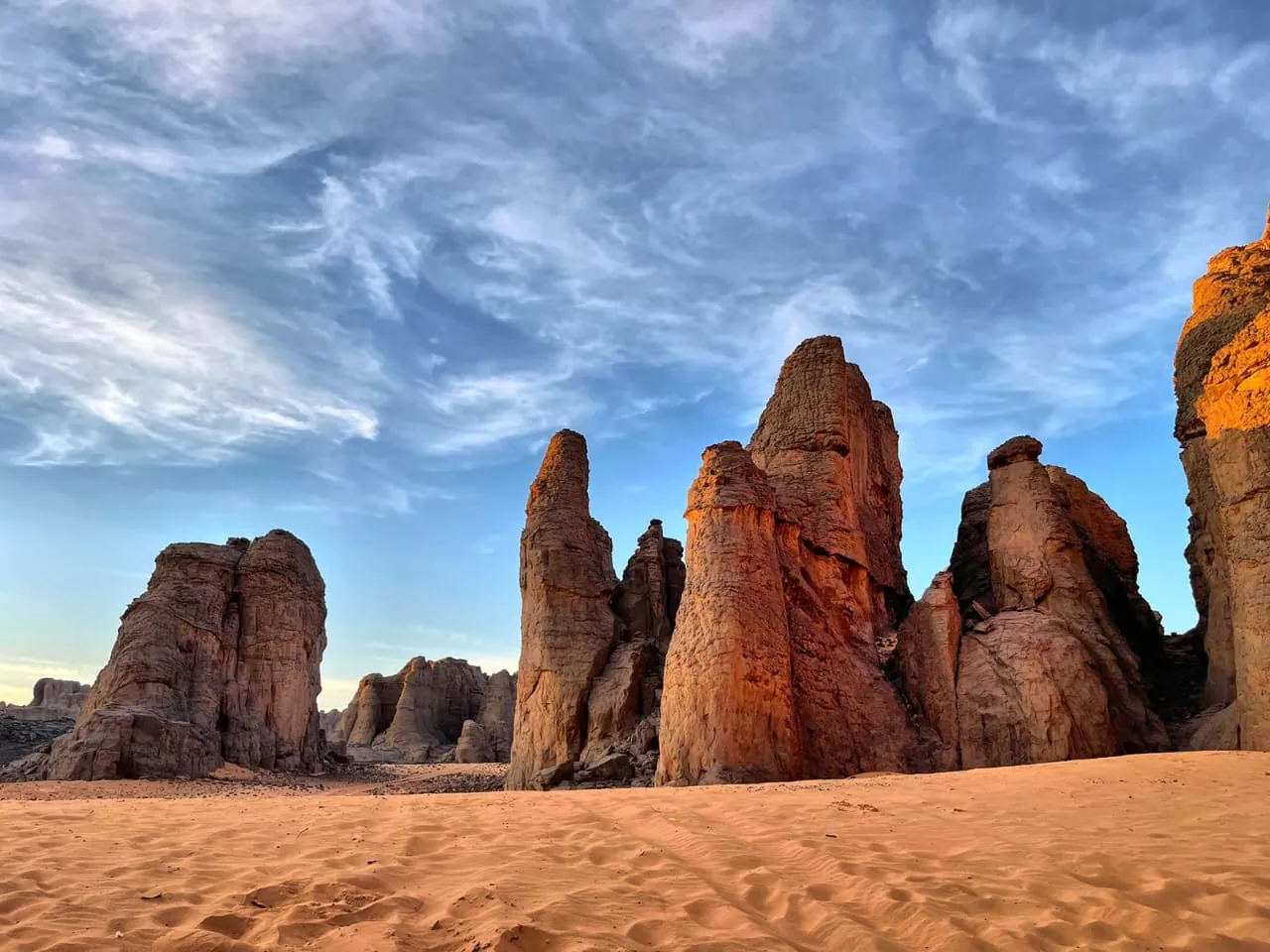
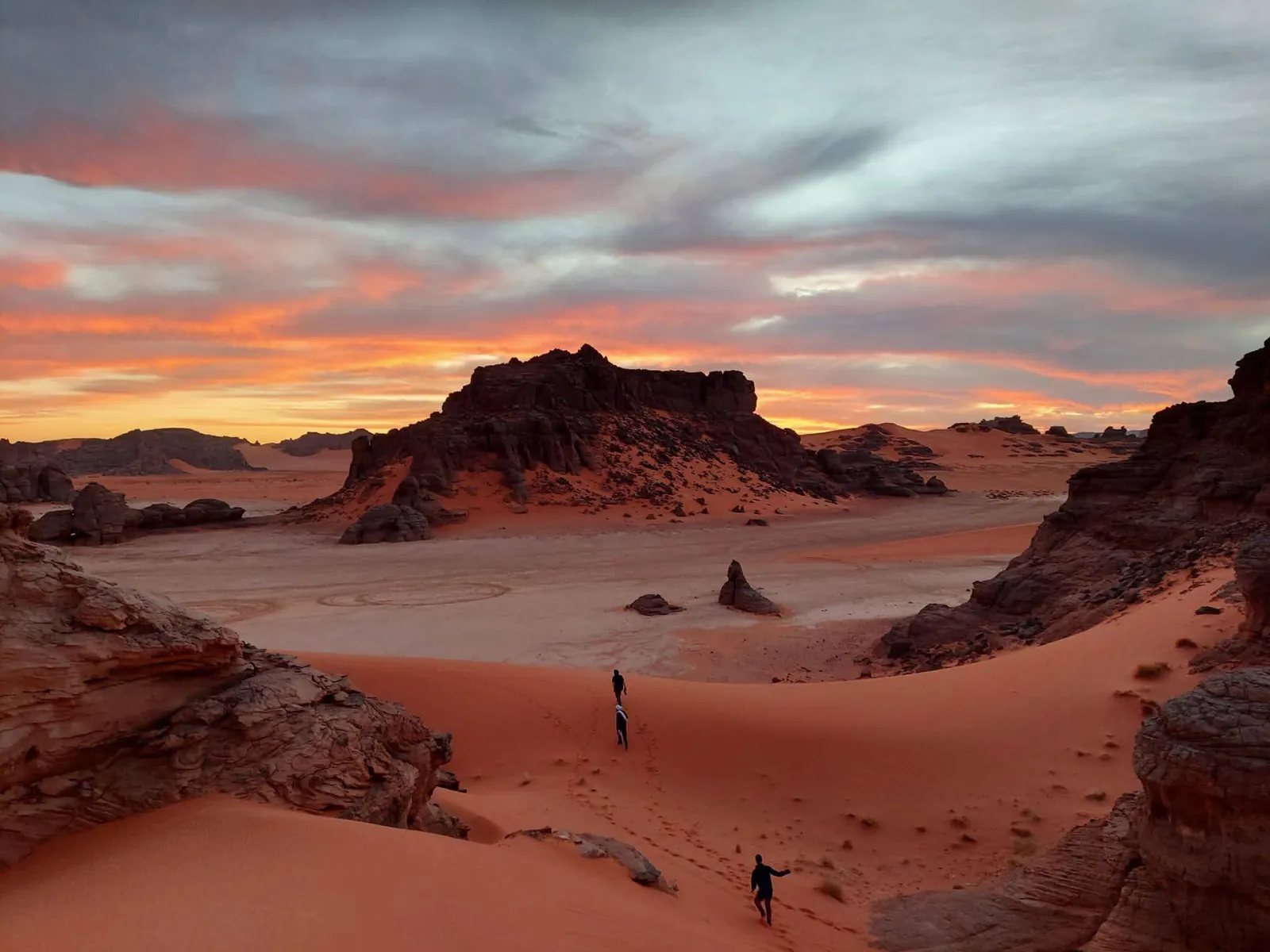
Sandstone labyrinths, red dunes, volcanic mountains, sand seas and oasis towns: a journey through the five faces of the Algerian Sahara and how to explore each of them.
Share your dates, group size and what draws you here. We reply with a personalised itinerary and a clear price — free, with no obligation.