
Algeria has seven sites on UNESCO's World Heritage List — six of them listed in 1980–1982, among the earliest in Africa. Together they tell a story that runs from the green Sahara of the Neolithic to the Ottoman city of Algiers. Here is a guide to each one, followed by the living traditions recognised by UNESCO.
1. Al Qal'a of Beni Hammad (1980)
In the Hodna mountains near M'Sila stand the ruins of the first capital of the Hammadid dynasty, founded in 1007. The great mosque's 25-metre minaret, one of the oldest in Algeria, still rises over the site, and excavations revealed palaces decorated with ceramics and stucco that influenced architecture as far as Sicily. Visit: as a detour between Algiers and Constantine.
2. Tassili n'Ajjer (1982)
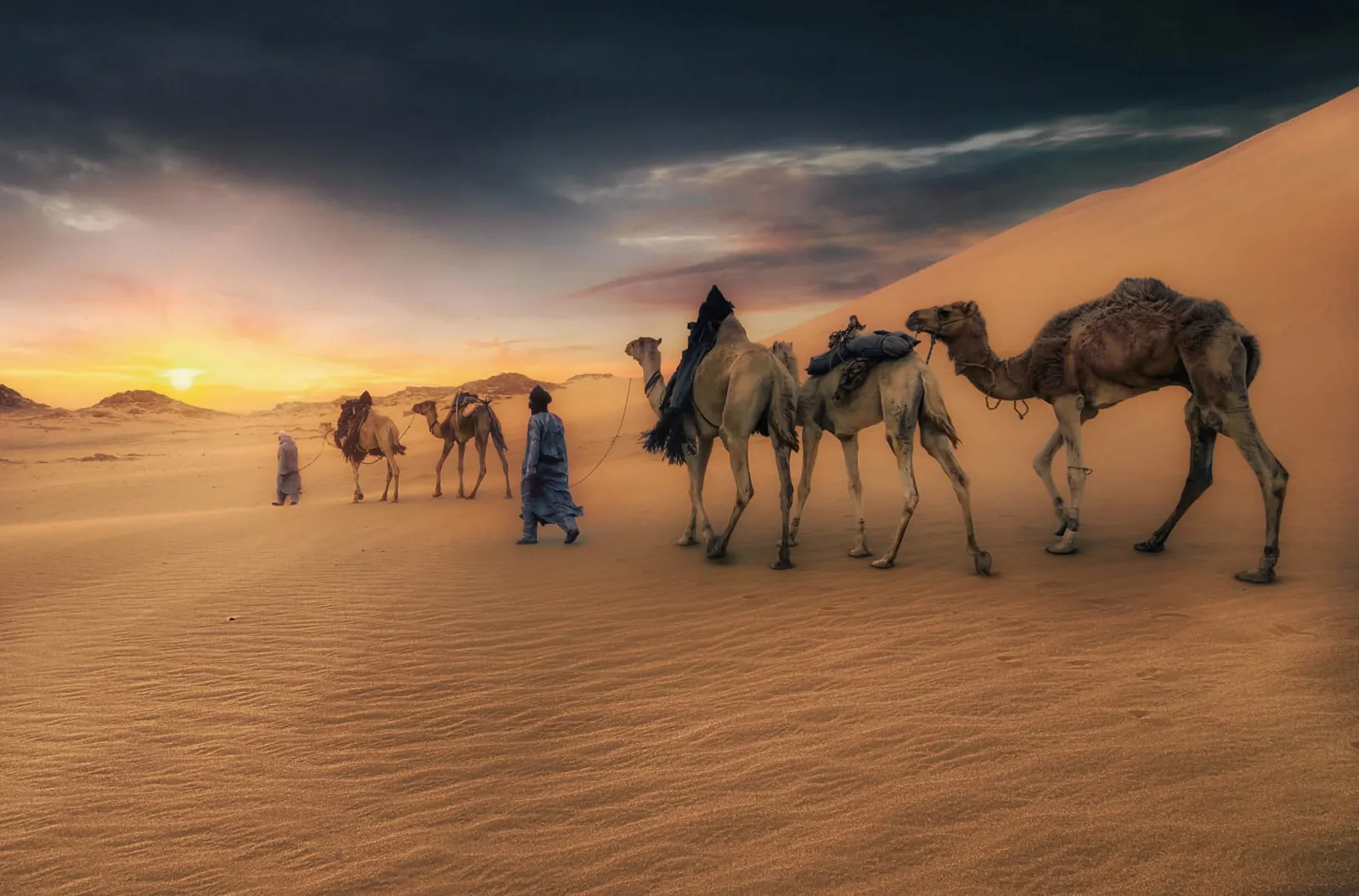
The only Algerian site listed for both nature and culture. Its sandstone "rock forests" above Djanet shelter thousands of paintings and engravings recording climate change and human life over millennia, from wild fauna to cattle herders and camel caravans. Visit: October–April, on foot and by 4x4 with local guides. See Tassili n'Ajjer.
3. M'Zab Valley (1982)
Five fortified ksour built by the Ibadi Mozabite community between the 11th and 14th centuries, with houses designed for community life, climate and defence. The valley still functions as a living urban landscape. Visit: with official local guides; dress modestly and do not photograph residents in the holy towns. See Ghardaïa and the M'zab.
4. Djémila (1982)
Roman Cuicul, built along a ridge at about 900 m, adapted the classic Roman town to mountain terrain. Its forum, temples, theatre, baths and Christian basilicas are remarkably complete, and its museum holds outstanding mosaics. Visit: a day trip from Constantine or Sétif.
5. Tipasa (1982)
A Punic trading post that became a Roman colony, with early Christian basilicas, necropolises and the monumental Royal Mausoleum of Mauretania nearby. The site's setting above the sea is unforgettable. Visit: an easy day from Algiers. See Tipaza.
6. Timgad (1982)
Founded by Trajan around 100 AD, Timgad is a textbook example of Roman town planning: a square grid with the Arch of Trajan, a theatre, library and markets. Visit: from Batna or Constantine; spring and autumn are best.
7. Kasbah of Algiers (1992)
The citadel and old town of the Ottoman deys, built on the site of ancient Icosium. Its mosques, palaces and traditional houses, organised around courtyards and terraces, form a unique Mediterranean urban fabric. Visit: on foot with a local guide. See Algiers.
Living heritage
UNESCO's lists of intangible cultural heritage include several Algerian traditions — some shared with neighbours:
- Ahellil of Gourara — sung poetry of the Zenata communities around Timimoun.
- Rites and craftsmanship of the wedding costume of Tlemcen.
- Practices related to the imzad — the Tuareg one-string violin (with Mali and Niger).
- Sebeiba — the ritual and ceremonies of Djanet.
- The Sbuâ — the annual pilgrimage to the zawiya of Sidi El Hadj Belkacem in Gourara.
- Couscous — knowledge and practices (shared with Mauritania, Morocco and Tunisia).
- Raï — popular folk song of Algeria.
To experience them, time your trip with local celebrations or ask us to arrange encounters with musicians and artisans. Read our guide to culture and heritage.
Visiting heritage sites respectfully
- Never touch or wet rock art, mosaics or carved surfaces.
- Do not take stones, pottery or artefacts — exporting antiquities is prohibited.
- Respect places of worship and the rules of the holy towns of the M'zab.
- Use local, licensed guides: they bring the sites to life and support the communities who protect them.
Sources: UNESCO World Heritage Centre, Algeria (whc.unesco.org) — dates of inscription; UNESCO Intangible Cultural Heritage lists (ich.unesco.org). Consulted on 19 October 2026.