
At first sight the Sahara seems lifeless. Spend a few days there with a Tuareg guide, though, and you start to notice tracks in the sand every morning, birds around the camp and shapes moving on distant rocks. Desert animals are discreet, mostly active at dawn, dusk and night, and remarkably adapted to heat and drought.
Mammals
The dorcas gazelle is protected and found across the Sahara; it can live without drinking, taking the water it needs from leaves such as acacia. The Barbary sheep, or mouflon, lives on rocky slopes and plateaus like the Tassili; it is threatened by hunting and very shy.
The fennec, the smallest fox in the world, is famous for its huge ears, which release heat and pick up the faintest sound of prey under the sand. Its cousin, the sand cat, was first described in the Algerian desert in 1858. The caracal, a long-eared wild cat, can leap several metres to catch birds.
The rarest of all is the Saharan cheetah, critically endangered and almost never seen. Easier to observe are rock hyraxes, hare-sized animals living near the wadis, and the tiny jerboa, which hops at night on long hind legs.
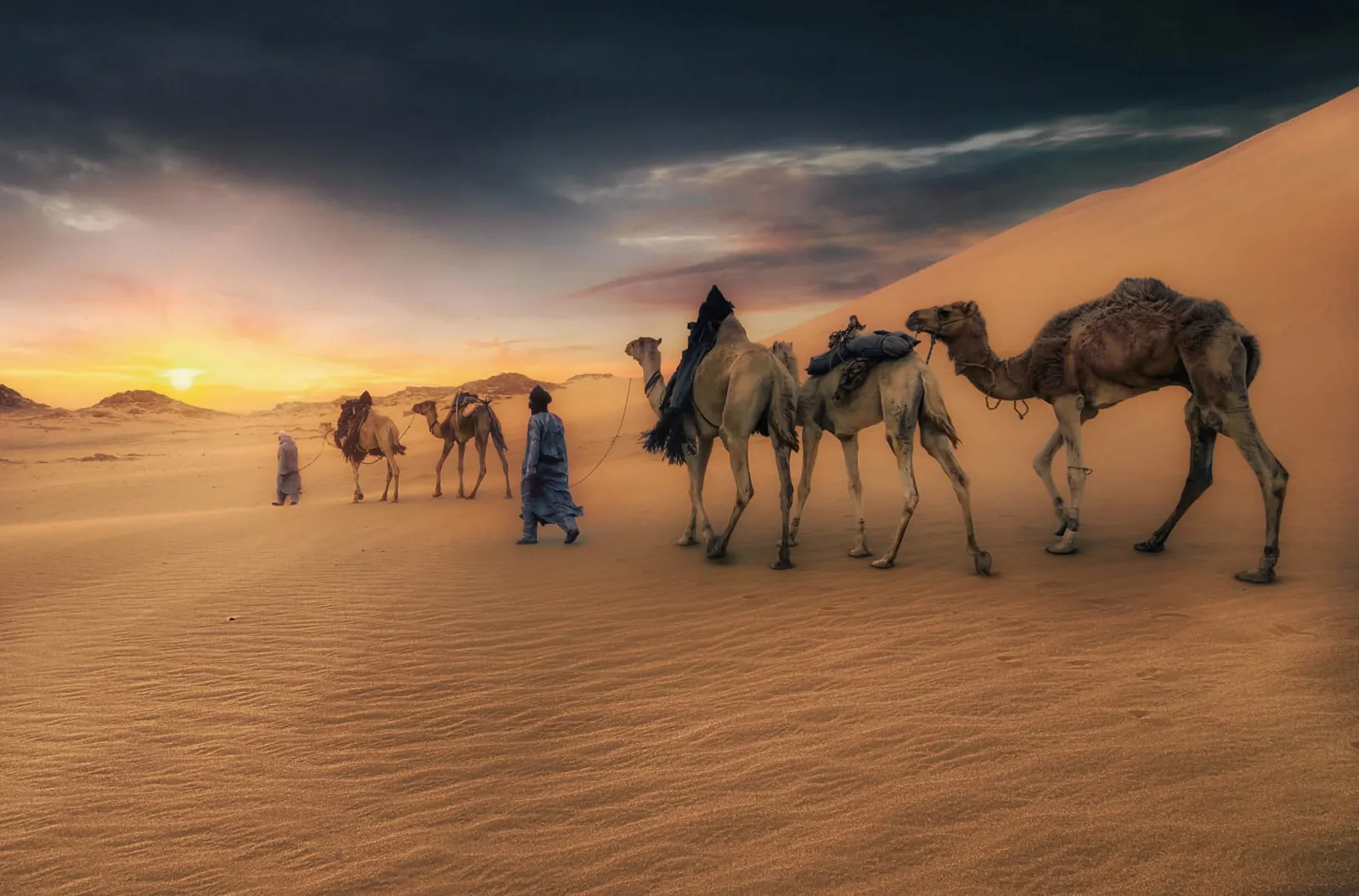
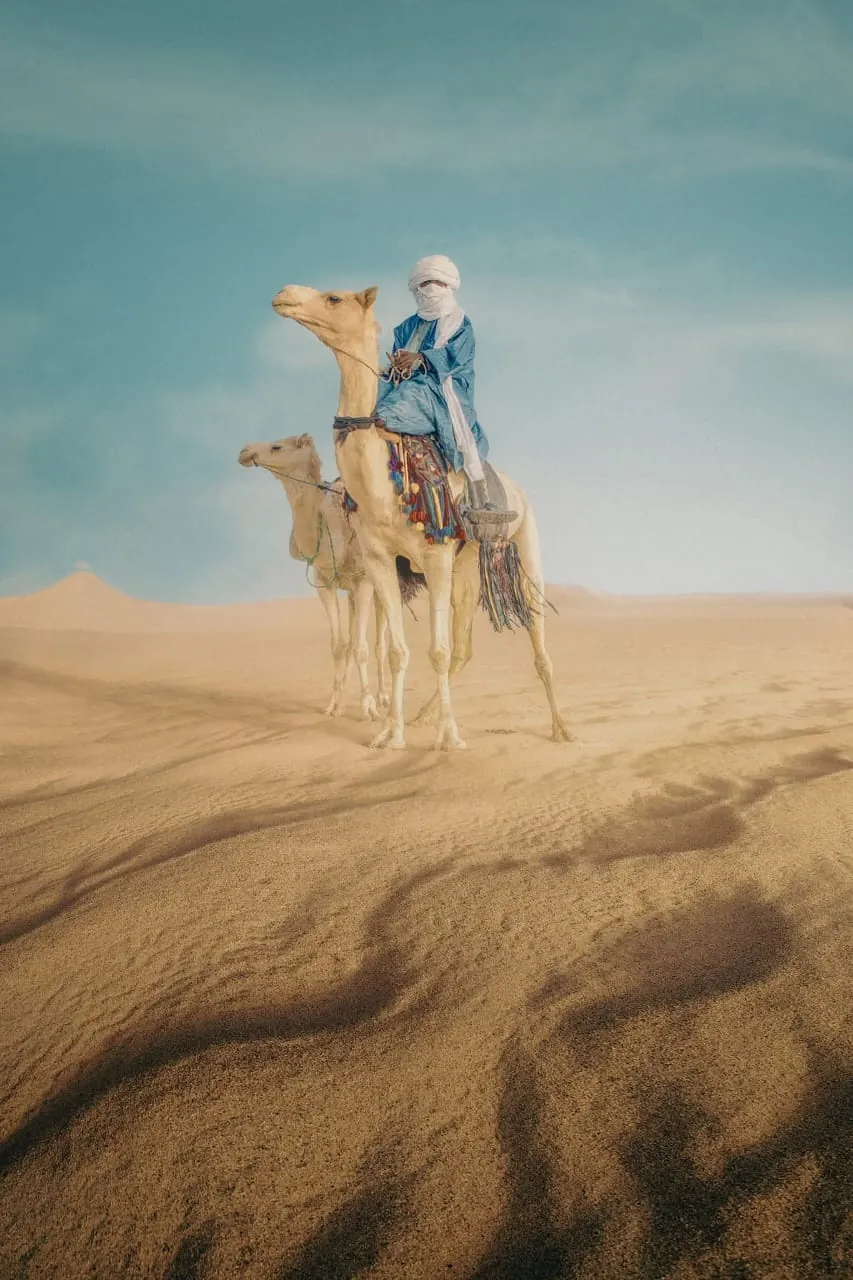
And of course the dromedary, companion of the nomads for centuries, which can go for days without water.
Reptiles and insects
Agamas and geckos warm themselves on the rocks, while the spiny-tailed uromastyx and the desert monitor are the largest lizards. Two venomous vipers live in the Sahara, as do many species of scorpion — one more reason to wear closed shoes in the evening and shake out your boots in the morning. Your guide will show you where to sit and where not to.
Birds
The white-crowned wheatear, black with a white cap, often hops around the camp; the Tuareg see it as a bearer of good luck. Raptors such as falcons, eagles and owls are the birds you are most likely to see overhead.
Watching wildlife responsibly
Keep your distance, never feed animals, and stay silent at dawn: that is when the desert is most alive. On our Tadrart Rouge and Tassili circuits, SEFAR Aventure guides read the tracks around camp every morning and share what passed during the night.